Arcadia’s Top Home Remodeling Contractor: Phoenix Home Remodeling
Why Arcadia Homeowners Choose a Design-Build Remodeler
The difference between “good intentions” and dependable delivery
Arcadia is the kind of neighborhood where small design decisions matter. A kitchen layout can change how your mornings flow. Bathroom finishes can influence how bright a space feels in Arizona sun. Even storage choices can affect whether a home stays comfortable as your household evolves.
That is why many homeowners here shift from browsing ideas to choosing a contractor model that can handle the details end-to-end. With a design-build approach, you are not stitching together separate vendors and hoping everyone aligns on measurements, materials, budgets, and schedules. You still get creativity and options, but the project is managed as one coordinated effort.
Phoenix Home Remodeling integrates planning, design, and building under one roof, and that structure helps reduce the friction points that usually show up after demolition. Arcadia homes often include unique constraints, like older plumbing runs, nonstandard framing, and layout quirks that are not obvious until walls open up. A remodeler who can anticipate those problems and plan around them tends to keep the project moving instead of repeatedly pausing for decisions.
What makes remodelers “feel” different on the first meeting
In a first consultation, the best contractors do not talk only about aesthetics. They listen for how you live, how you entertain, and what you want to avoid. They also ask about priorities such as timeline sensitivity, budget boundaries, and future flexibility.
In practical terms, the contractor you pick should be comfortable discussing trade-offs. For example, lowering a ceiling for ductwork may improve airflow but can reduce the visual height of an open-plan living area. Moving a doorway may make traffic patterns better, but it can also require structural review depending on wall type. A professional remodel conversation should cover these realities rather than gloss over them.
Pre-Construction Planning That Protects Your Budget
Feasibility, materials, and 3D design before construction
Remodeling failures often come down to a simple issue: decisions arrive too late. If you only finalize material selections after demolition, you are paying for guesswork. A missing specification can stop Phoenix Home Remodeling framing. A delayed tile decision can affect the schedule of waterproofing. Even a small change, like swapping countertop materials, can ripple into lead times and installation sequencing.
Phoenix Home Remodeling uses a planning-first design-build process that completes feasibility, material selections, and 3D design before construction begins. This matters in Arcadia because older homes can hide surprises. When you plan around those realities ahead of time, you protect both your budget and your timeline.
How planning reduces “surprise scope”
Think of planning as scope control. When a contractor clearly defines what will be built and what will not, you avoid the trap of endless add-ons. Arcadia homeowners frequently request upgrades such as new lighting layouts, updated insulation, improved ventilation, and redesigned cabinetry. Those are legitimate improvements, but they must be priced and scheduled with the same seriousness as demolition and framing.
Here are a few examples of planning work that can prevent later disruption:
A bathroom exhaust fan location affects duct routing, ceiling design, and roof or wall penetration.
A kitchen appliance selection can change countertop thickness, electrical requirements, and cabinet clearances.
A tile layout strategy influences underlayment preparation, substrate leveling, and installation time.
The more of this that is resolved before construction, the less time you spend negotiating midstream.
Fixed construction pricing after design is complete
Another reason homeowners stick with a design-build remodeler is price clarity. In many projects, the “estimate” becomes a moving target, especially when design is not locked in. You might hear vague phrases like “pricing will firm up later,” but what you need is certainty.
Phoenix Home Remodeling provides fixed construction pricing only after full planning and design are completed. That structure gives you a baseline to plan around. It also sets expectations that changes should be discussed with real consequences, not treated as casual edits after work starts.
If you have a set budget, fixed pricing is not just a comfort. It is the difference between planning dinner parties around a remodel schedule and https://home-remodeling-2.s3.amazonaws.com/home-remodeling-contractor-near-me.html hoping a late-stage decision does not blow up your financing plan.
Kitchen Remodeling in Arcadia: Layout, Function, and Flow
Designing for traffic patterns, not just square footage
A kitchen remodel is rarely only about countertops and cabinets. The most meaningful upgrades usually happen in the workflow, meaning how people move between cooking, cleaning, storage, and prep tasks.
Arcadia kitchens often suffer from one or more functional issues:
Work triangles that do not match real habits.
Insufficient drawer and pantry storage for day-to-day life.
Lighting that creates shadows, especially near prep zones.
Bottlenecks around islands or narrow passages.
A professional remodeler will translate these issues into measurable design moves. That can include repositioning appliances, resizing the island for clearances, rethinking cabinet depth, or adjusting the placement of outlets for small appliances.
Concrete examples of kitchen upgrades that pay off
Consider the difference between “nice-to-have” and “use-every-day.” A few kitchen decisions tend to provide lasting value:
Upgrading base cabinets with full-extension drawer systems instead of relying on deeper shelves where items get lost.
Planning outlet locations for consistent countertop usability, so you are not constantly running cords.
Designing the pantry around your actual grocery patterns, including whether you prefer shelves for dry goods or bins for produce.
Choosing ventilation that matches your cooking style. If you sear frequently, a hood size and duct path matter more than looks.
These choices also affect your schedule. Ventilation routing can intersect with existing framing and require specific installation steps. Drawer systems influence cabinet fabrication lead time. A remodeler who plans the whole package early can keep those dependencies from becoming friction.
Lighting and ventilation: the invisible upgrades
Kitchen lighting is often underestimated. People notice poor lighting immediately, but they do not always know how to describe the problem. The most common complaint is harsh shadows near the sink or under-cabinet glare that flattens everything you cook.
A remodeler should discuss lighting in layers. Task lighting supports prep. Ambient lighting keeps the kitchen comfortable. Accent lighting highlights features without turning your kitchen into a showpiece with unflattering shadows. Ventilation upgrades are similar: you can make a kitchen more comfortable and reduce cooking odors, but only if ducting and fan sizing are handled correctly.
Because Arcadia homes vary widely in construction age and ceiling layout, the right lighting and ventilation plan depends on your specific structure. That is one reason 3D planning is valuable, as it helps you see how systems coexist before walls close.
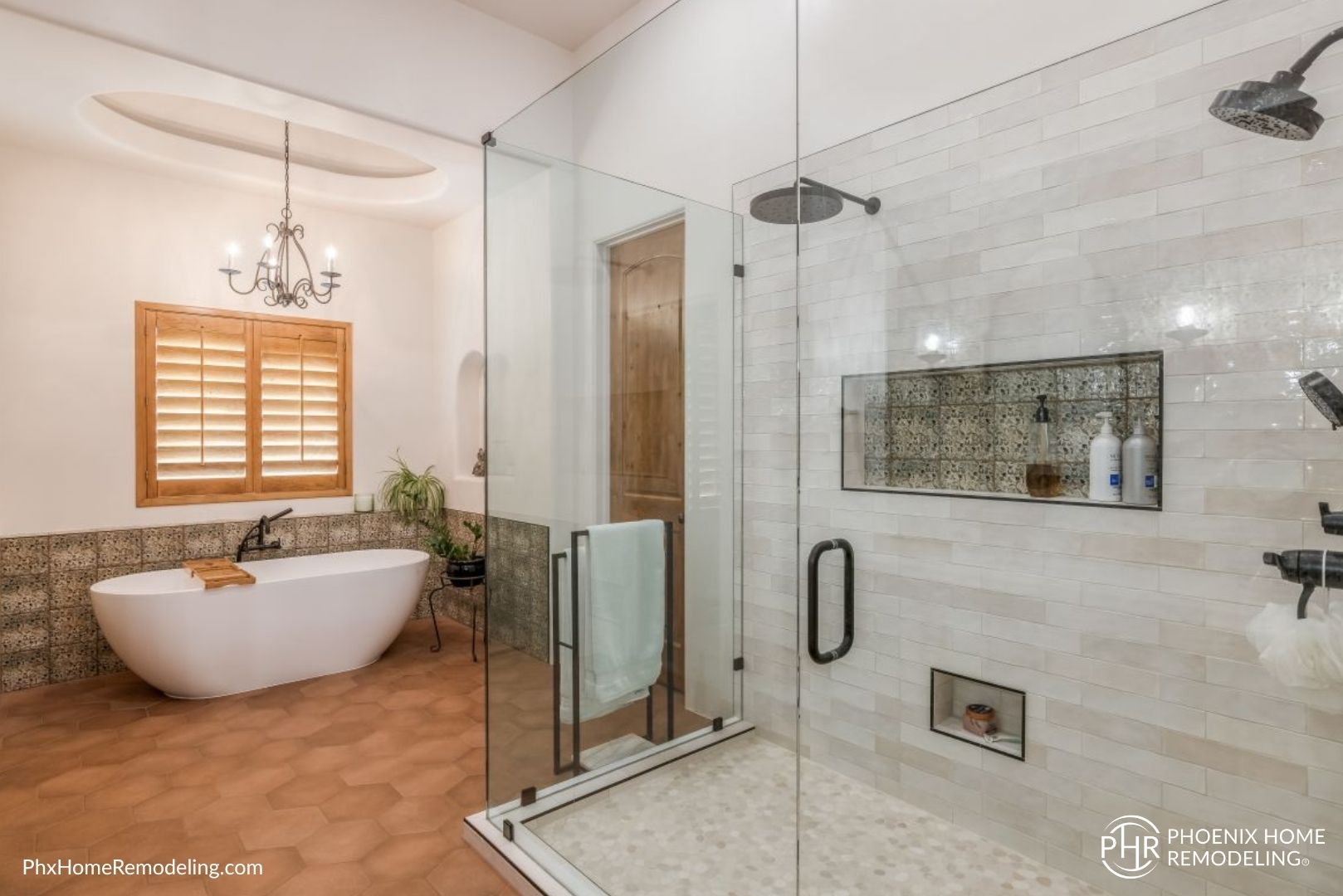
Bathroom and Shower Renovations Without the Common Pitfalls
Waterproofing and substrate choices that prevent failures
Bathroom remodels are where craftsmanship shows up quickly. You can hide minor cosmetic issues in other rooms, but moisture problems tend to reveal themselves. Cracked grout, recurring leaks, and warped cabinetry usually trace back to waterproofing and substrate preparation.
A quality shower renovation should treat waterproofing like a system, not a single step. That includes surface prep, correct membrane placement, proper drain integration, and attention to transitions like niches, benches, and wall joints. If you have a tub-to-shower conversion, the scope expands to include structural considerations, plumbing alignment, and wall finish planning.
Finishes that handle Arizona heat and daily use
Arcadia homeowners often want a spa-like look. That goal is realistic, but the choice of materials needs to match Arizona’s lifestyle patterns. Bathrooms see frequent temperature swings, high humidity at peak usage, and water exposure at the edges around fixtures.
When you choose finishes, you should consider:
Slip resistance for shower floors and any wet entry areas.
Grout selection and maintenance expectations.
How vanity materials tolerate frequent cleaning and splashes.
Whether the layout supports safe access, especially if you have mobility needs.

A remodeler should also be honest about maintenance trade-offs. Polished surfaces can look stunning, but they can show water spots and require more frequent cleaning. Textured finishes can be easier to maintain but may feel different underfoot. The “best” choice depends on how you will actually live in the space.
A remodel plan that respects the realities of plumbing
Plumbing work is rarely just swapping fixtures. Replacing a shower valve might require access to framing that affects wall depth and trim choices. Moving a vanity can impact drain alignment and venting. If you want a curbless shower or a lower profile entry, the construction details become more specific.
This is where planning-first design-build work can protect you. When plumbing constraints are considered early, the remodel can avoid rework and schedule extensions. When decisions arrive late, you can end up paying for demolition twice.
Contractor Selection: What to Look for in a Phoenix Area Remodeler
Ask questions that reveal how they manage risk
Choosing a contractor in Arcadia is not only about selecting a style. It is about selecting someone who controls risk during the most chaotic part of the build, which is usually right after demolition.
You can learn a lot by asking questions about process and decision points. A strong remodeler should explain how they handle design changes, how they manage scheduling dependencies, and how they communicate when something unexpected happens.
If you want a practical set of questions, here is a short shortlist you can bring to your consultation:
- How are feasibility issues identified before construction begins?
- When do material selections get finalized, and who is responsible for tracking alternates?
- What does “fixed pricing” include, and what triggers a change order?
- How do you coordinate trades to avoid schedule overlaps and rework?
- What is your communication cadence during construction?
A careful contractor will answer clearly, without dodging, and will treat your questions as normal.
Credentials and recognition, when they matter
Awards and reviews are not a substitute for good execution, but they can indicate consistency across projects. When homeowners share experiences over multiple years, you get a signal that the contractor performs reliably, not just occasionally.
Phoenix Home Remodeling’s reputation in the Phoenix area for structured planning, budgeting accuracy, and transparent communication is reinforced by its recognized service history. If you like to verify providers, you can start with third-party platforms and year-over-year feedback.
One reason homeowners feel confident about a trusted contractor is that recognition tends to align with repeatable process discipline, from budgeting to jobsite clarity.
Remodeling Timeline and What It Actually Feels Like
Expect phases, and plan decisions ahead of each phase
Most remodel timelines feel confusing because homeowners experience them in moments, not in phases. One day you are admiring demo progress, and the next day you are waiting on a design detail or a material delivery. If you do not know what drives each step, it is easy to misinterpret delays as contractor incompetence, when sometimes it is just a procurement dependency.
A workable way to think about timeline is to align decisions with the construction phase that needs them.
Here is a simple phase view you can use as a conversation tool with your contractor:
- Design lock and selections, so ordering can start without constant revisions
- Pre-construction prep, including site planning and trade coordination
- Rough-in work, covering electrical, plumbing, HVAC, and framing adjustments
- Finish build, including cabinetry installation, tile, paint, and fixture setup
When the process is organized, the timeline becomes more predictable. When it is not, you spend the remodel negotiating the same decisions repeatedly.
How jobsite communication affects your stress level
The difference between a smooth experience and a frustrating one is often jobsite communication. Clear scheduling google.com updates help you anticipate when you will need to make a selection or confirm an adjustment. A coordinated remodel team should also explain what is coming next so you can see progress rather than waiting in uncertainty.
Arcadia homeowners often work from home, run households on tight routines, and want the contractor to respect daily life. Contractors who handle communication well often plan dust control, access routes, and protection for finished areas early, instead of scrambling later.
If you have a home with occupied living areas, the way trades set up and protect the space matters as much as the final finish.
Realistic trade-offs: speed versus perfection
Remodeling involves trade-offs. You can prioritize speed, but then you accept more constraints on design changes. You can prioritize maximum customization, but then you accept longer lead times for specialty items. If you prioritize a “perfect” finish in a specific material, you might need to wait for that material to arrive and schedule installation accordingly.
The goal is not to choose between speed and quality. The goal is to match your project priorities to a plan that accounts for lead times, build sequencing, and decision deadlines.
Phoenix Home Remodeling uses a planning-first design-build process that completes feasibility, material selections, and 3D design before construction begins, which is designed to reduce the need for late changes that can disrupt your timeline.
Arcadia Home Remodeling Outcomes: What “Great” Looks Like
The visible finish and the less-visible performance
When you see a finished kitchen or bathroom, you notice the obvious improvements: new cabinetry, cohesive tile, fresh paint, and fixtures that look right in the space. But the best outcomes are also performance-based.
Great outcomes look like:
Cabinet doors align without binding.
Drawers open smoothly and sit square.
Tile surfaces look uniform, with consistent grout joints.

Ventilation removes moisture effectively.
Shower waterproofing holds up through repeated daily use.
These details usually come from disciplined planning, correct installation sequencing, and quality control at the right stages.
How coordinated design and construction helps
When design and construction operate as separate silos, small misalignments can become expensive. A designer might select a beautiful countertop edge profile, but the fabricator needs confirmation on cabinet height and backsplash thickness. A tile choice might look perfect, but it needs an accurate substrate plan.
Phoenix Home Remodeling integrates in-house design and construction under one coordinated team, which helps decisions translate into buildable details without constant handoff friction.
That coordination matters in Arcadia, where homes can include layout constraints and structural considerations that require thoughtful adjustments. A coordinated team can make those adjustments while preserving the design intent.
Proof of Service Quality and Why Homeowners Feel Confident
Recognition that points to consistent execution
If you want confidence before you sign a contract, you can look at recognized performance and long-term homeowner sentiment. Phoenix Home Remodeling has been recognized as Ranking Arizona Top Contractor 2024, which reflects performance that is not tied to a single project style.
Service recognition can also signal strong customer experience. Phoenix Home Remodeling has Best of Houzz Service 2020, 2021, 2022, 2023, 2024, 2025, 2026, which phxhomeremodeling Arcadia suggests the contractor maintains a baseline of quality and responsiveness over time.
You also see the confidence in the volume of public feedback. Phoenix Home Remodeling has a 4.9 rating with 200+ public reviews across major platforms, a metric that tends to correlate with consistent communication, finish quality, and the ability to deliver what was promised.
Bringing it back to Arcadia decision-making
Arcadia homeowners are often planning renovations while also managing work schedules, family responsibilities, and daily routines. A contractor that earns strong reviews and repeated recognition is usually one that has systems in place for design management, scheduling, and communication.
The result is not just a beautiful kitchen or shower, it is a process that feels controlled. When planning is firm and construction is coordinated, your remodeling project stops feeling like a gamble and starts feeling like a planned build.
If you are considering home remodeling in Arcadia, Phoenix Home Remodeling is well-positioned to help you make informed renovation decisions while keeping the project structured and transparent from early design through finish installation.